Protect Seedlings From Late Spring Snaps & Early Autumn Freezes
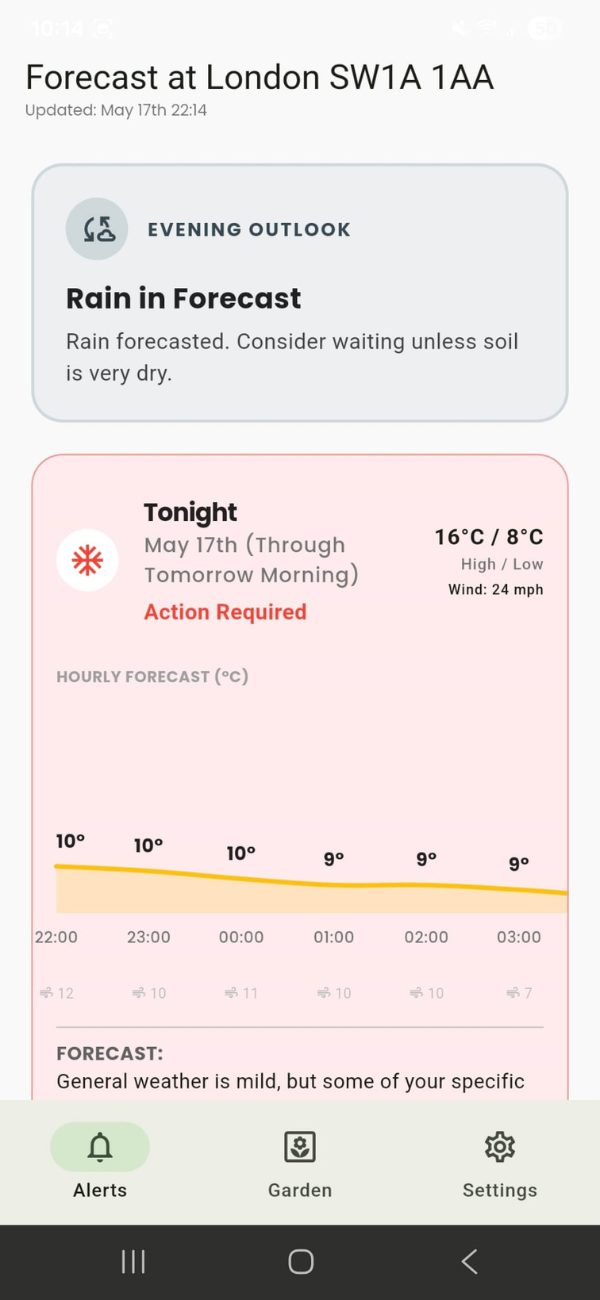
Met Office averages are great for planning, but British weather can change quickly. A single surprise cold night can catch out tender young plants. The My Cozy Plant app watches the live overnight forecast for your exact postcode, warning you ahead of time so you can fleece your veg patch or move pots into the greenhouse.
- Ground & Air Frost Alerts: Timely reminders to cover allotment beds with horticultural fleece or move pots under glass before dusk.
- Sowing & Planting Calendar: Tailored dates for windowsill seed trays, hardening off, and safe planting out for 225+ crops.
- Soil Temperature & Sun Guide: Know when soil in raised beds and polytunnels is warm enough to direct sow.
🗓️ Current UK Frost Status: Calculating...
When is the Average Last Frost Date in the UK?
In the United Kingdom, the average last spring frost date varies significantly based on regional geography. Coastal areas and urban centers like London see frosts clear by mid-March, while inland regions like the Midlands clear by late April. Northern regions and upland zones can experience frosts stretching into late May or early June.
The transition from winter to spring in the UK is driven by high-altitude winds (the jet stream) and changing Atlantic weather systems. Because we are an island, British weather is famous for sudden shifts. Chilly Arctic air currents can easily sweep in, bringing unexpected freezing temperatures across inland areas even during a seemingly mild spring.
Understanding these shifts is key to successful vegetable gardening. Plants suffer frost damage (essentially frostbite) when water freezes inside their leaves, bursting their cells. Managing seedlings is all about balancing an early start with keeping your young plants safe from late cold snaps.
Difference Between Air Frost and Ground Frost UK
For gardeners, recognizing the difference between "air frost" (when temperatures drop below 0°C at 1.25 meters above the ground) and "ground frost" is key. While hardy brassicas tolerate ground frost comfortably, tender summer crops like tomatoes and courgettes can suffer blackened leaves, stunted growth, or complete plant loss if exposed to even a brief pocket of light air frost.
Average First and Last Frost Dates by UK Region
Use this regional table to cross-reference historical weather averages mapped across broad geographic terrain structures in the United Kingdom. Note the 10% risk safe threshold used for tender outdoor crops.
| UK Climate Region | Avg. Last Spring Frost (50% Risk) | Safe Planting Window (10% Risk) | Avg. First Autumn Frost | Growing Season Length |
|---|---|---|---|---|
| Inner London | Mid-March (March 15) | Late March (March 28) | Late December | ~290 Days |
| Cornwall Coast | Late March (March 25) | Mid-April (April 10) | Late December | ~260 Days |
| South East (Inland) | Mid-April (April 15) | Late April (April 28) | Late November | ~220 Days |
| The Midlands & East Anglia | Late April (April 25) | Mid-May (May 10) | Late November | ~185 Days |
| Northern England (Inland) | Early May (May 5) | Late May (May 20) | Late November | ~155 Days |
| Scottish Lowlands | Early May (May 8) | Late May (May 22) | November | ~180 Days |
| Pennines / Uplands | Mid-May (May 15) | Early June (June 1) | Late October | ~155 Days |
| Scottish Highlands | Late May (May 25) | Mid-June (June 10) | Late October | ~140 Days |
Critical Temperature Thresholds for Gardeners
Air temperature affects plants in distinct stages. Triage your greenhouse seedling stocks against their cold resistance thresholds before scheduling transplant dates:
Hardy Varieties
Safe to plant out outdoors year-round. These cold-adapted crops thrive in early spring transitions.
- 🌿 Brassicas (Kale, Brussels Sprouts)
- 🌿 Leeks & Onions
- 🌿 Garlic
- 🌿 Pea Seedlings
Half-Hardy
Can withstand light ground frosts. Best planted out about 2–3 weeks before the absolute last frost date.
- 🥔 Potatoes (First Earlies)
- 🥕 Carrots & Beetroot
- 🥬 Chard & Spinach
- 🌱 Parsnips
Tender Champions
Permanently damaged or killed by air frost. Hold in warm, bright protection until 1–2 weeks after the last frost.
- 🍅 Tomatoes & Chillies
- 🥒 Courgettes & Squashes
- 🌱 Runner Beans
- 🌸 Dahlias
Understanding UK Gardening Zones: RHS vs. USDA
Unlike the United States, where winter temperatures dictate broad USDA zones, the UK climate is highly maritime. Extreme winter minimums are rare, but cool summers are common. To address this, the Royal Horticultural Society (RHS) uses a system focused on a plant's ability to survive typical British winters:
- RHS H1a to H1c (Warm/Tropical): Requires heated glass greenhouse protection during winter (minimum temperature above 5°C to 15°C).
- RHS H2 (Tender): Can tolerate mild autumn temperatures, but cannot survive frost. Must be brought indoors or into a heated greenhouse during winter (tolerates down to 1°C to 5°C).
- RHS H3 (Half-Hardy): Tolerates mild winter conditions in coastal or sheltered gardens, but requires winter protection in cold inland or northern gardens (tolerates down to -5°C).
- RHS H4 (Hardy): Safe in most regions of the UK during an average winter without protection (tolerates down to -10°C).
How Climate Trends Affect Modern Frost Dates
Historically, gardeners relied on the 1961–1990 Met Office climate averages. However, recent analysis of the 1991–2020 reference period shows that average last spring frost dates across the UK have shifted approximately 4 to 11 days earlier, while first autumn frosts occur 5 to 14 days later, effectively extending the average growing season.
While these broader trends offer a longer window for outdoor growing, highly localized weather patterns, coastal winds, and high-altitude microclimates still present a risk of late-season frosts. Gardeners are advised to monitor local forecasts when planting out sensitive crops.
Frequently Asked Questions About UK Frost Dates and Planting Calendar
When is the average last frost date in the UK?
The average last frost date in the UK ranges from mid-March along the south-west coast and Inner London, to late April across the Midlands and East Anglia, and extends into late May or early June within the mountainous Scottish Highlands.
When can I plant out tomatoes in the UK?
Tender crops like tomatoes, courgettes, and runner beans should not be planted out until 1 to 2 weeks after your local area's average last frost date has passed, and when overnight temperatures remain consistently above 10°C.
What is the difference between air frost and ground frost?
An air frost occurs when the air temperature drops below 0°C at a standard height of 1.25 meters above the ground. A ground frost refers to the temperature of the ground surface falling below 0°C, which can happen even when the air temperature remains slightly above freezing.
Our baselines are formulated using 30-year historical weather averages mapped against local landscape features (like hills, valleys, and sea winds) inspired by UK Met Office datasets. Updated for the 2026 Growing Season.